FTII · CENTRE FOR OPEN LEARNING · GOREGAON, MUMBAI · 29 SEPT – 3 OCT 2026 · WORKSHOP WRAP
DIGITAL CINEMATOGRAPHY WORKSHOP · BHARAT ARORA
Five Evenings.
Every Frame Earned.
Five days of hands-on cinematography at FTII, Mumbai. Canon C400, Aputure lights, Sekonic meters — and the grammar of the frame.
| Course Director Bharat Arora | Dates 29 Sept – 3 Oct 2026 5:00 PM – 9:00 PM · Evening Batch |
| Venue Goregaon (W), Mumbai | Organiser FTII Centre for Open Learning Film & Television Institute of India, Pune |
| Camera Canon EOS C400 Full Cine Lens Kit · Canon India | Equipment Aputure Lights & Flags ND Filters · Sekonic Light Meter |
The digital camera is the most capable tool in the history of cinematography. But capability is not the same as language. This workshop existed to close that gap — to take participants from knowing how to operate a camera to knowing how to see with one.
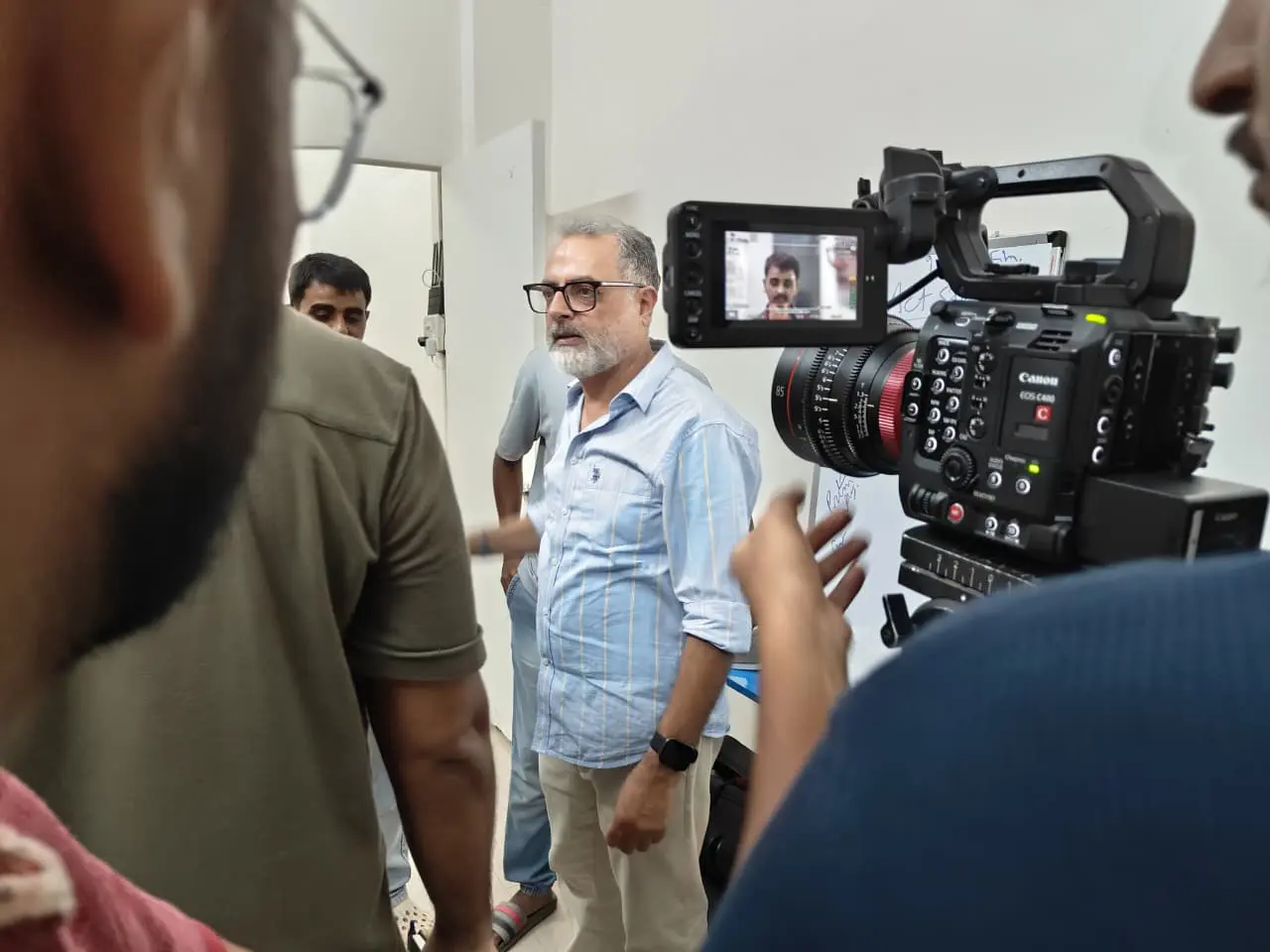
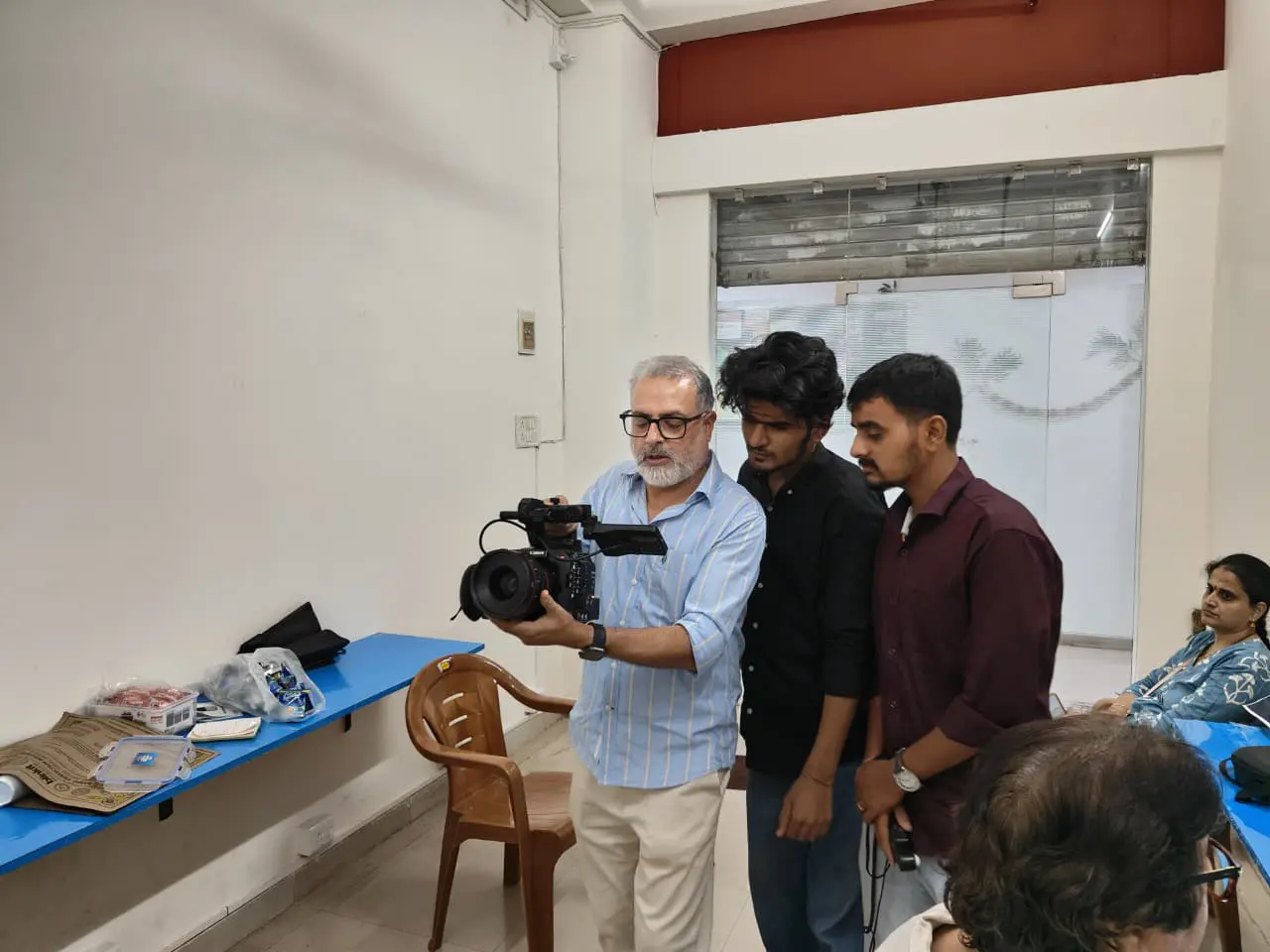
Five evenings. Four hours each. No day ended without something in the can. Every session built from core theory directly into live camera work — the Canon EOS C400 on a fluid head, Aputure lights rigged and flagged, a Sekonic incident meter in every participant’s hand. This was not a classroom. It was a working floor.
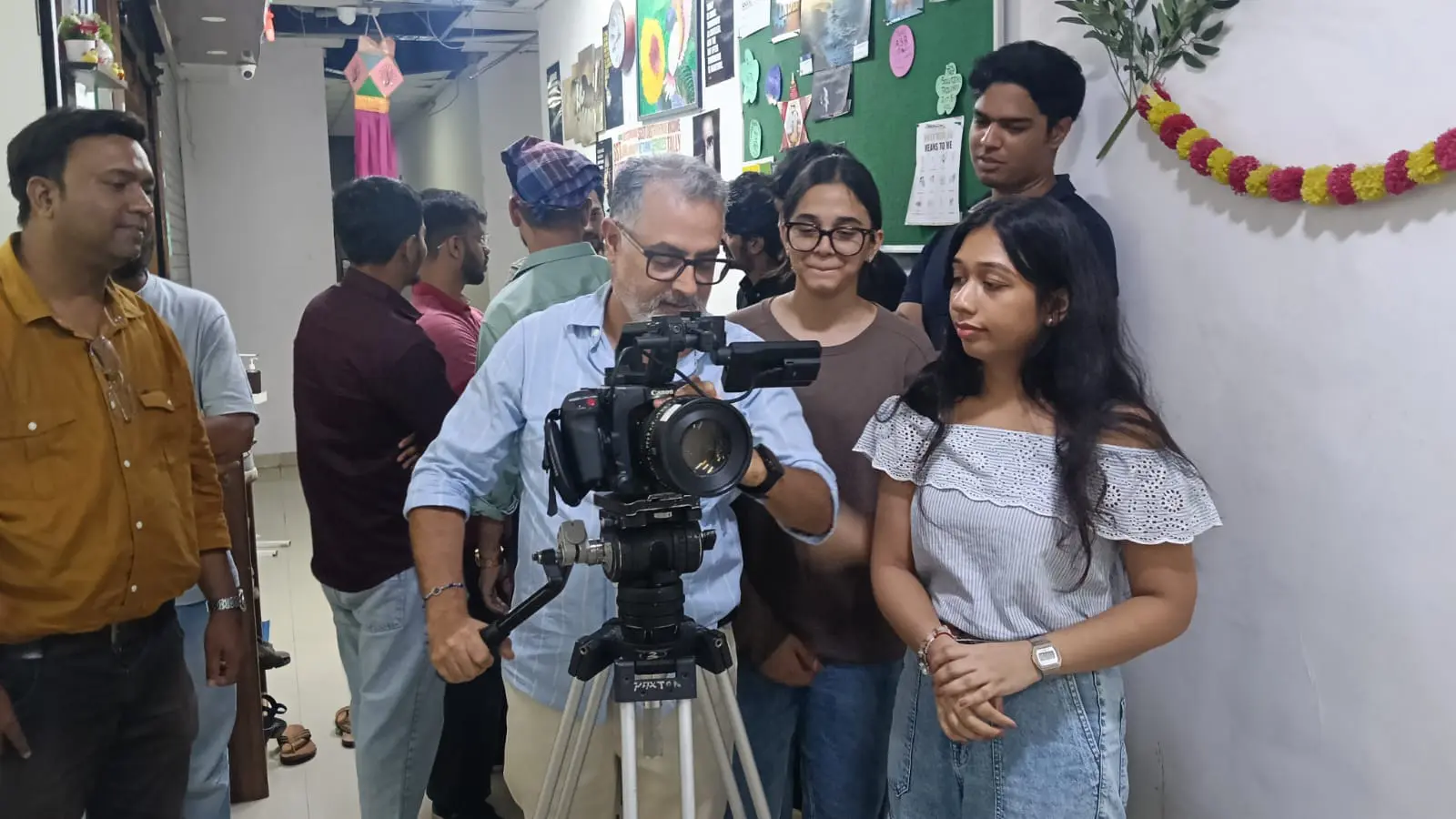
The Grammar of the Frame.
The first session established the principle I bring to every course: a cinematographer must understand light and lens before they touch a camera. The correlation between shutter angle and motion blur is not a technical footnote — it is the difference between a frame that reads as cinema and one that reads as footage. We spent the opening evening entirely inside that distinction.
Shot language, motivated light, depth of field, the 180° rule — these were not covered as theory to be tested and forgotten. They were the criteria by which every practical exercise that followed was evaluated. By Day 2, participants were not just shooting. They were justifying every decision in the frame.
“The exposure meter does not lie. Neither does the histogram. Learn to read both — and you will never guess at light again.”
— Bharat Arora · FTII Digital Cinematography Workshop · Goregaon, Mumbai · 2026
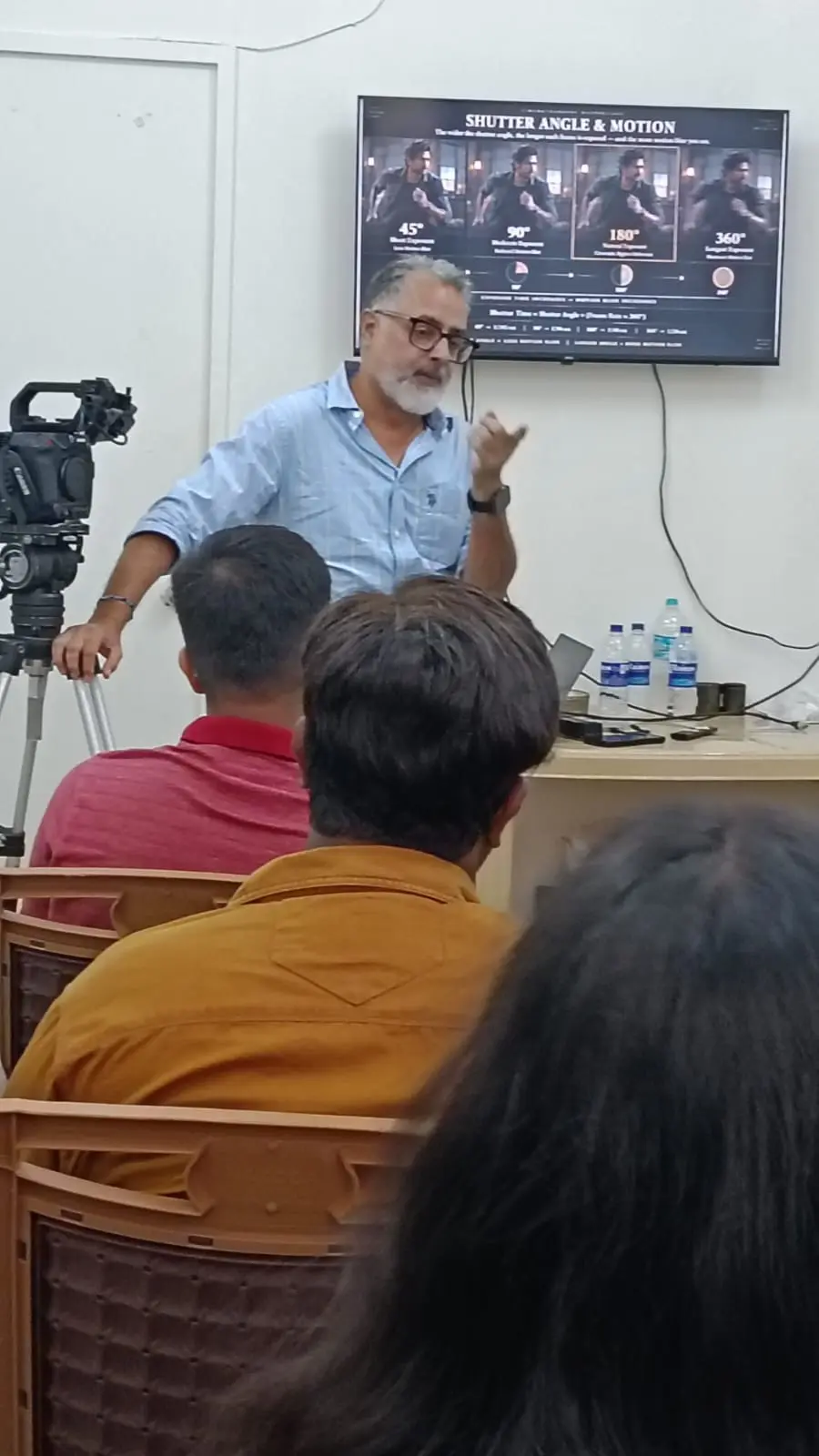
The Canon C400. The Full Kit.
Canon India provided the EOS C400 and a complete cinema lens kit for the duration of the workshop. The C400 is not a beginner’s camera — it is a working professional cinema camera, and putting it in the hands of participants from Day 1 set the expectation correctly. This course was not going to prepare them for a camera they would upgrade to later. It was going to train them on the camera professionals actually use.
Alongside the C400, the Aputure lighting kit — lights, flags, and diffusion — gave participants control over their light source rather than just their exposure. The Sekonic incident light meter completed the circuit: every participant metered for skin before touching the aperture ring. That discipline, built over five evenings, becomes instinct on a real set.
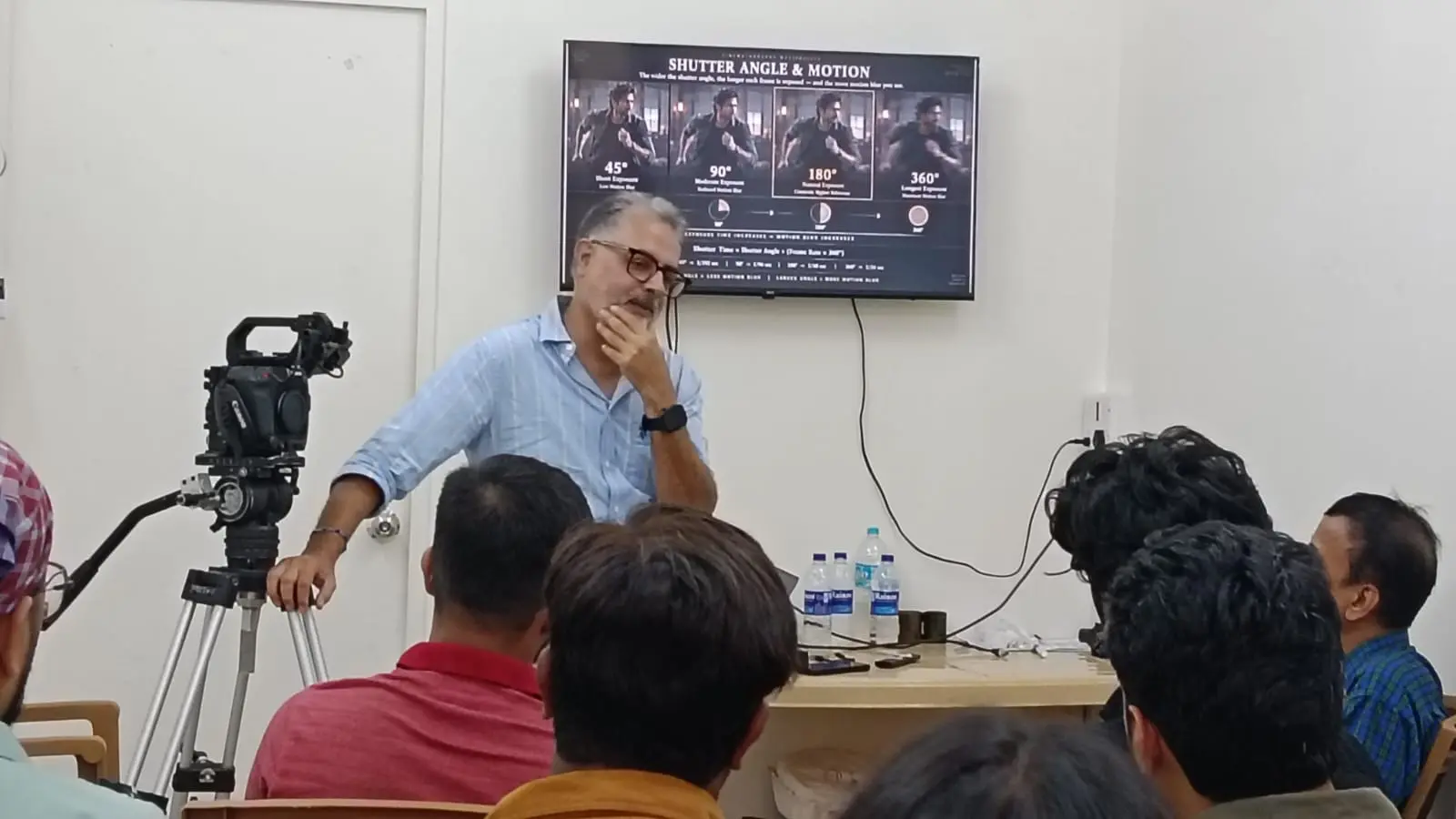
Five Evenings · Day by Day.
Day 01 · Monday, 29 September
Understanding the Digital Camera
Sensor size, recording formats, log profiles, codec comparison. Camera menu walkthrough. Participants shot a test sequence comparing log vs standard profiles on the same subject — the first night no one left without a feel for the C400 in their hands.
Day 02 · Tuesday, 30 September
Exposure & The Lens
The 180° shutter rule. Native ISO, ND filters, incident metering with the Sekonic against waveform and histogram. Lens vocabulary — focal length, bokeh, prime vs zoom. The same scene shot at five different apertures. Every participant read and metered before shooting.
Day 03 · Wednesday, 1 October
Lighting for the Digital Image
Motivated sources, hard vs soft quality, colour temperature, high-key vs low-key. Two full lighting setups built and shot using the Aputure kit — one dramatic low-key interior, one naturalistic window-supplemented setup. Every participant operated the camera and adjusted the light.
Day 04 · Thursday, 2 October
Composition & Camera Movement
The frame as a canvas — aspect ratio, negative space, visual weight. Motivated movement: pan, tilt, push, pull, handheld. Participants shot a 3-shot sequence — wide, medium, close-up — reviewed and critiqued as a group for composition and lens choice.
Day 05 · Friday, 3 October
Putting It All Together
The cinematographer’s workflow end to end. Colour science, log file handling, LUT application, a guided grade walkthrough. A single scene shot collaboratively — each participant took a turn on shot, exposure, lens, or light. The assembled footage was graded together. Group critique and instructor feedback closed the course.
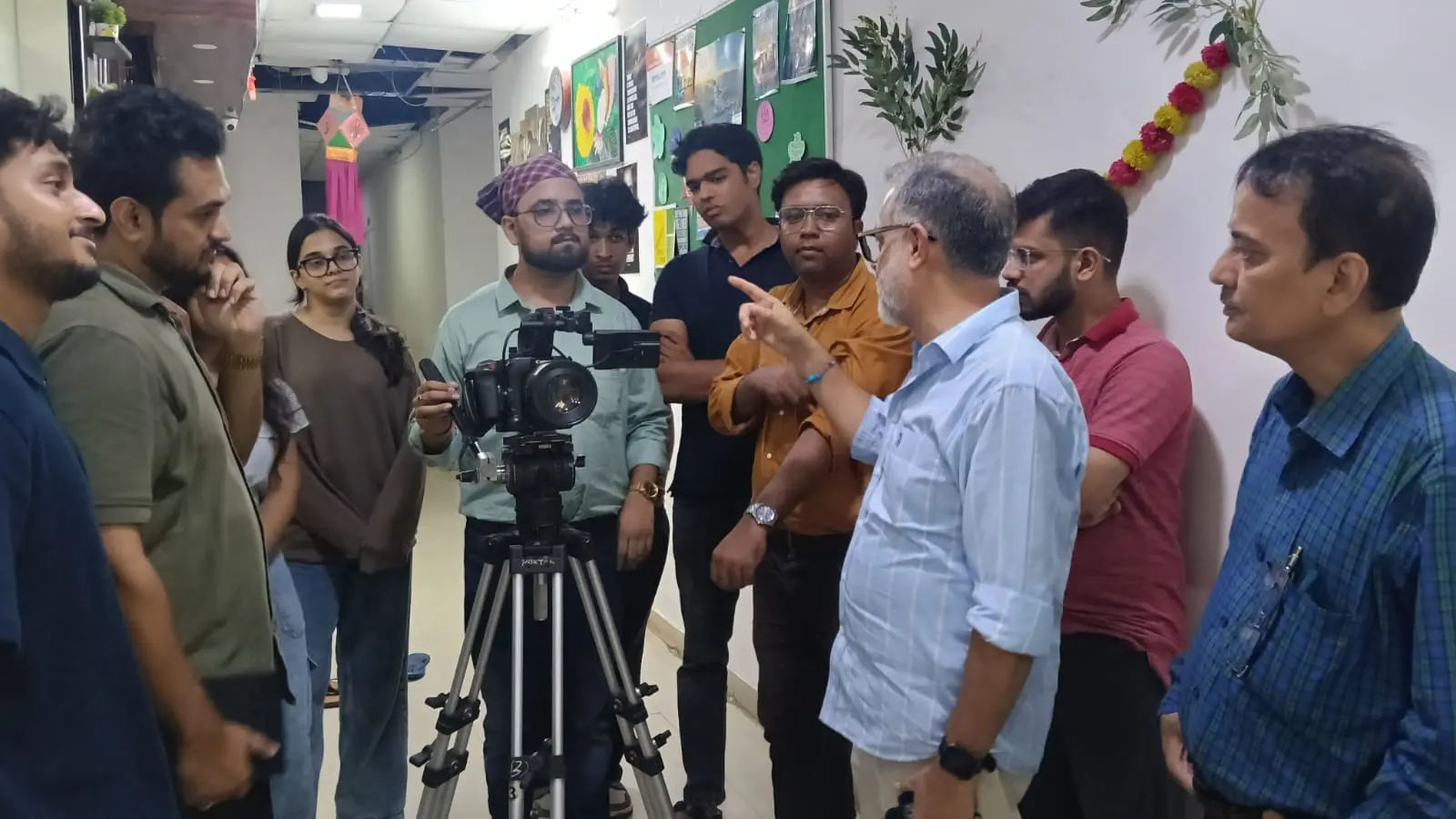
What the Workshop Proved.
By the final evening, every participant had metered light, rigged a source, flagged a spill, set a 180° shutter, chosen a lens for a reason, and looked at footage they had made — not in software, but through the eyepiece of a cinema camera.
The mix of participants was exactly what makes this format work — working photographers transitioning into cinema, camera operators who had learned on the job, directors who needed to understand what happens behind the camera. Each group brings a different literacy to the same tool. The course bridges them into a common language: the language of the frame.
My gratitude to FTII’s Centre for Open Learning for the institutional structure that makes intensive hands-on training like this possible at scale, and to Canon India for making the C400 and the complete cine lens kit available for the full five days. The camera in a student’s hand is not a prop — it is the argument.
“The camera does not make the image.
The cinematographer does.”
— BHARAT ARORA · @TSTOP_PITCHERS
© 2026 BHARAT ARORA · DIGITAL CINEMATOGRAPHY WORKSHOP · FTII CENTRE FOR OPEN LEARNING, MUMBAI