Looking Back at Our FTII Course.
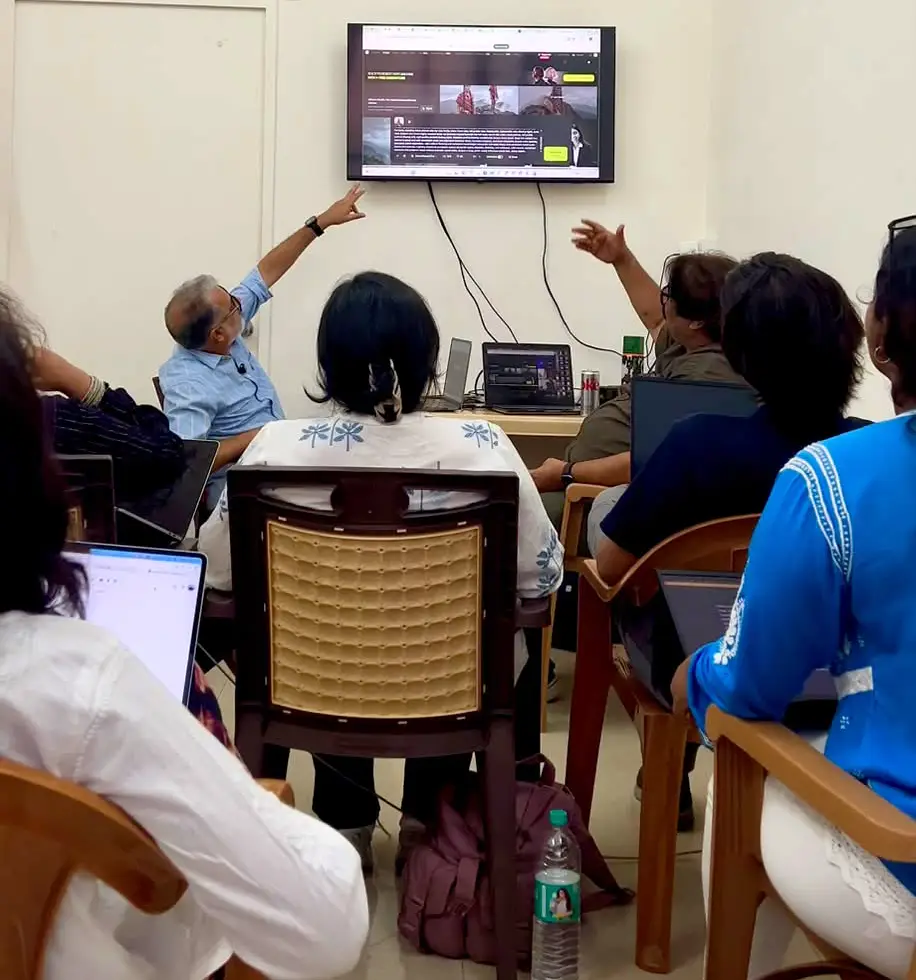
Some courses end on the last day. This one is still with me. Fifteen days in a small room in Goregaon — a screen on the wall, laptops open on every lap, a few faces joining in from other cities on a video call — and a group of people who walked in curious about AI and walked out thinking like filmmakers.
From 29th September to 13th October 2026, Rajesh Bhatia and I conducted The Art of Filmmaking & the Craft of AI Cinema, an AI filmmaking course with FTII’s Centre for Open Learning in Mumbai. Now that it is over, I wanted to sit down and write about what happened in that room.
Craft First. Then the Machine.
We didn’t open a single AI platform in the first week. Instead, we went back to the beginning — idea, script, breakdown, shot list, light, lens, blocking, performance, the edit. Rajesh Sir and I believe that the better you understand traditional filmmaking, the more control you have over AI. So the first five days were spent making sure everyone in the room understood how a film is actually made.
It was a quiet kind of preparation, and some participants were impatient to get to the tools. But by the second week, it became clear why we had done it this way.
When the Screen Became the Canvas.
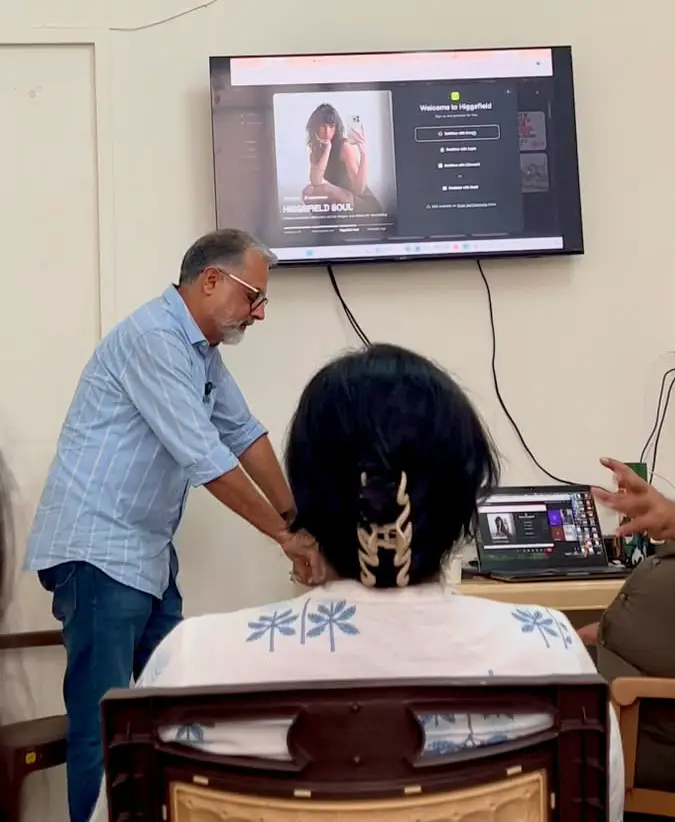
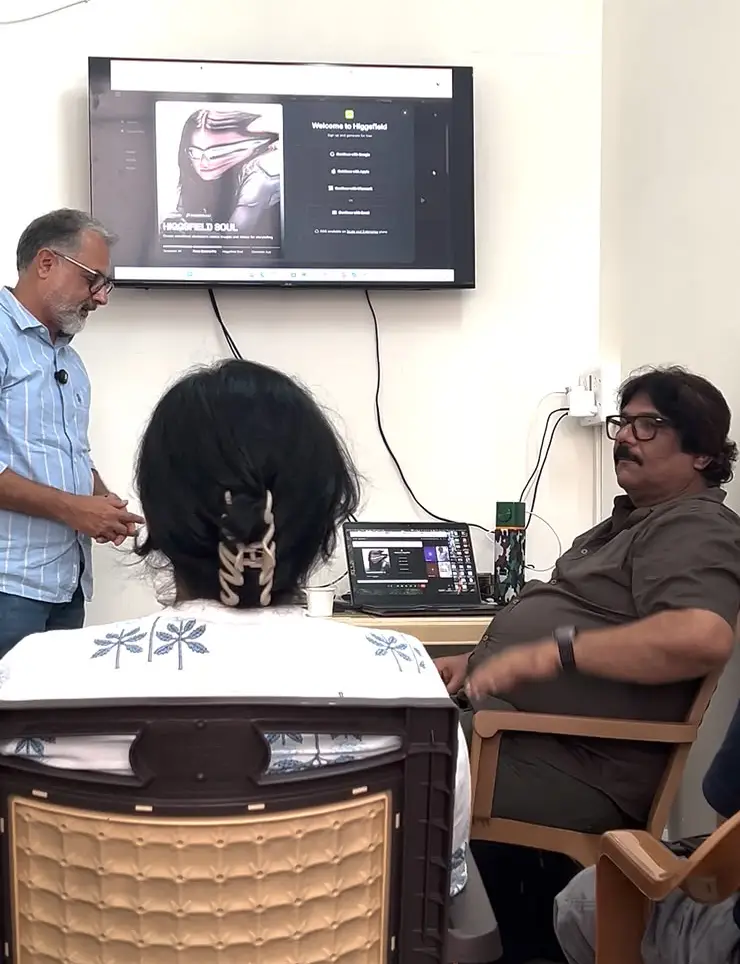
When the AI module began, the TV on the wall became our shared canvas. We generated frames live, broke them down and regenerated them — and every time, the questions were the ones we had asked in the first week. What is the lens doing? Where is the light coming from? Is this frame serving the story? Participants who had learned shot sizes and lighting on day three were now writing them into prompts — and seeing the difference immediately.
“A prompt is not a wish. It is a shot list written for a new kind of camera.”
That was the moment I enjoy most in any course — when people stop treating AI as a slot machine and start directing it. The conversation shifted from “what can this tool do?” to “what does my scene need?”
One Classroom. Many Cities.
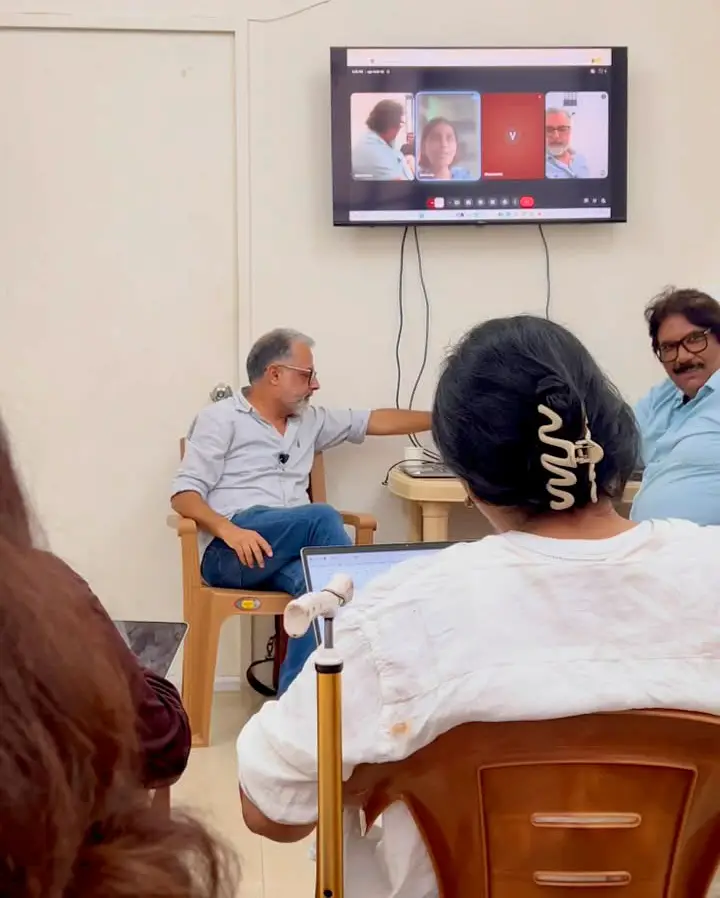 Participants joining us live from other cities
The AI module ran both in person and online, and the participants who joined from outside Mumbai were as much a part of the room as anyone sitting in it. Their faces on the screen, their questions in the discussions, their work in the critiques — it truly felt like one classroom spread across many cities.
Closing the AI Filmmaking Course.
In the final stretch, participants worked in groups to build their own short AI films — from concept note and visual bible to shot-by-shot generation, assembly, sound and colour. Rajesh Sir anchored the storytelling throughout, pushing every group to make sure their film had a reason to exist before it had a single generated frame. The course closed with each group presenting its workflow and screening its film.
Watching those films on the last day, I could see the first week in every one of them — in the framing, in the light, in the way a cut landed. That is exactly what this AI filmmaking course set out to do.
To FTII and Every Participant.
My sincere thanks to the Film and Television Institute of India and its Centre for Open Learning for trusting Rajesh Sir and me with this course, and to the outreach team who made the Mumbai edition run so smoothly. Most of all, thank you to every participant — in the room and on the screen — for fifteen days of questions, experiments and stories. I learned as much from you as I hope you did from us.
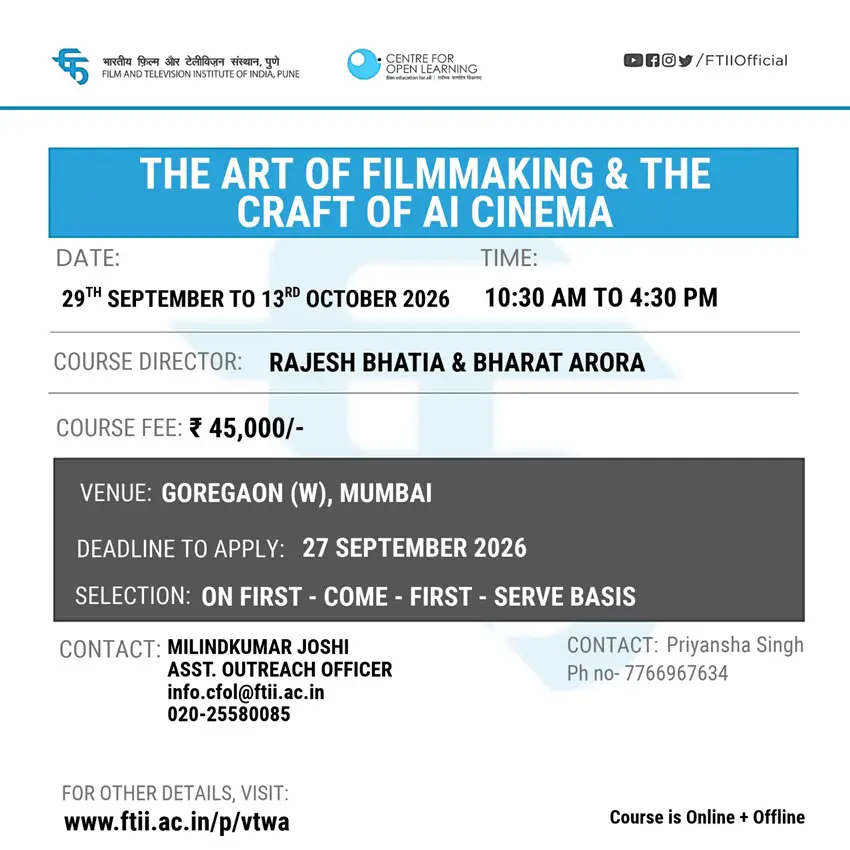 Where it all began — the original FTII course announcement
This course followed our FTII AI Cinema Masterclass in July. You can also read more about our recent masterclass at the Lucknow Film Festival and the workshops we have conducted this year.