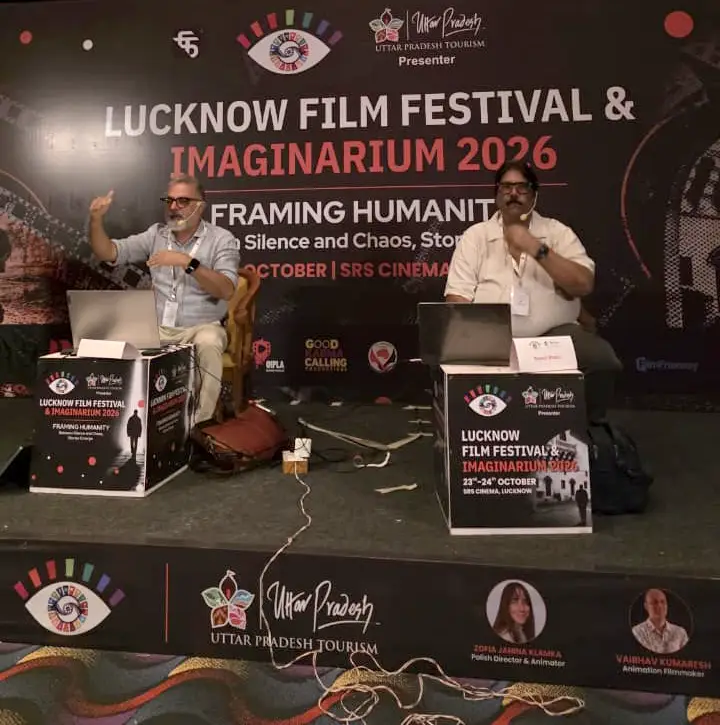
A Masterclass in Lucknow.
Lucknow has always understood the art of telling a story slowly, with grace. On 24th October 2026, inside a cinema hall in Gomti Nagar, that city sat down to watch stories being built by a new kind of hand.
Rajesh Bhatia and I conducted “AI: The New Canvas” — a masterclass on AI filmmaking at the Lucknow Film Festival Season 4 & Imaginarium 2026, hosted by festival director Renuka Tandon. Two days, one theme, and a hall full of students, filmmakers and curious minds who wanted to know one thing: where does the filmmaker stand when the machine can paint?
Conducted by Rajesh Bhatia & Bharat Arora · OpenFrame AI Lab
Hosted by Renuka Tandon, Festival Director · Lucknow Film Forum
SRS Cinemas, City Mall, Gomti Nagar, Lucknow · 24th October 2026
Now in its fourth season, the Lucknow Film Festival is organised by the AMREN Foundation through the Lucknow Film Forum and presented by Uttar Pradesh Tourism. This year it ran on 23rd and 24th October at SRS Cinemas, City Mall, under a theme that could not have been more fitting for a conversation about AI — “Framing Humanity: Between Silence and Chaos, Stories Emerge.”
Alongside the festival runs Imaginarium, its platform for artificial intelligence, animation, gaming and digital storytelling — built to introduce young people to new technologies and the careers opening up around them. Across two days the programme moved between international films, films by women directors, Polish animation curated by Tehzeeb Khurana, a session with animation filmmaker Vaibhav Kumaresh, a gaming panel, and an AI hackathon curated by Rajesh Sir.
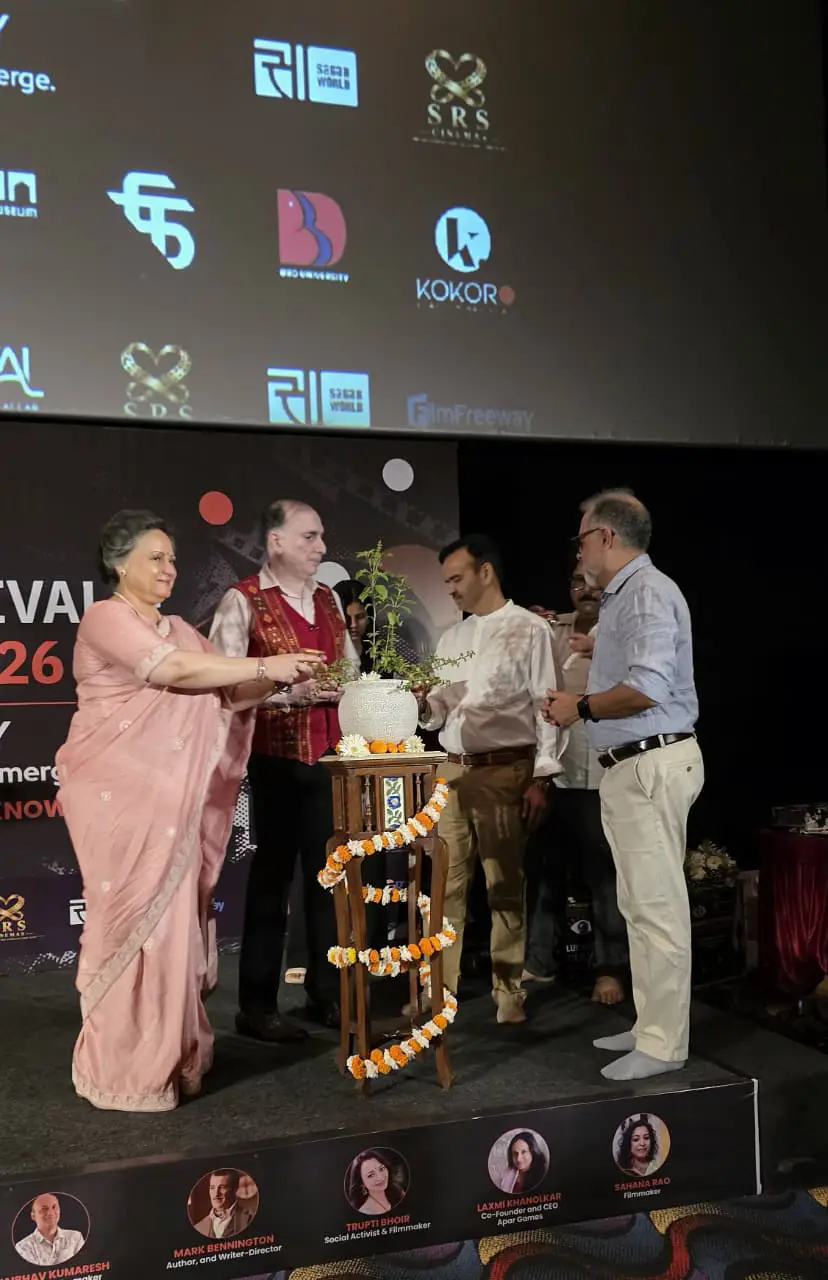 The inaugural ceremony with festival director Renuka Tandon and Santosh Ojha Sir, FTII
The festival opened in the traditional way — with an inaugural ceremony on stage. I was honoured to stand alongside Renuka Tandon, whose vision has carried this festival into its fourth season, and Santosh Ojha Sir, Head of Strategy and Innovation at FTII. FTII’s presence at a city festival like this one says something important: the conversation about AI in cinema is no longer limited to metros and tech circles. It is reaching every city that loves film.
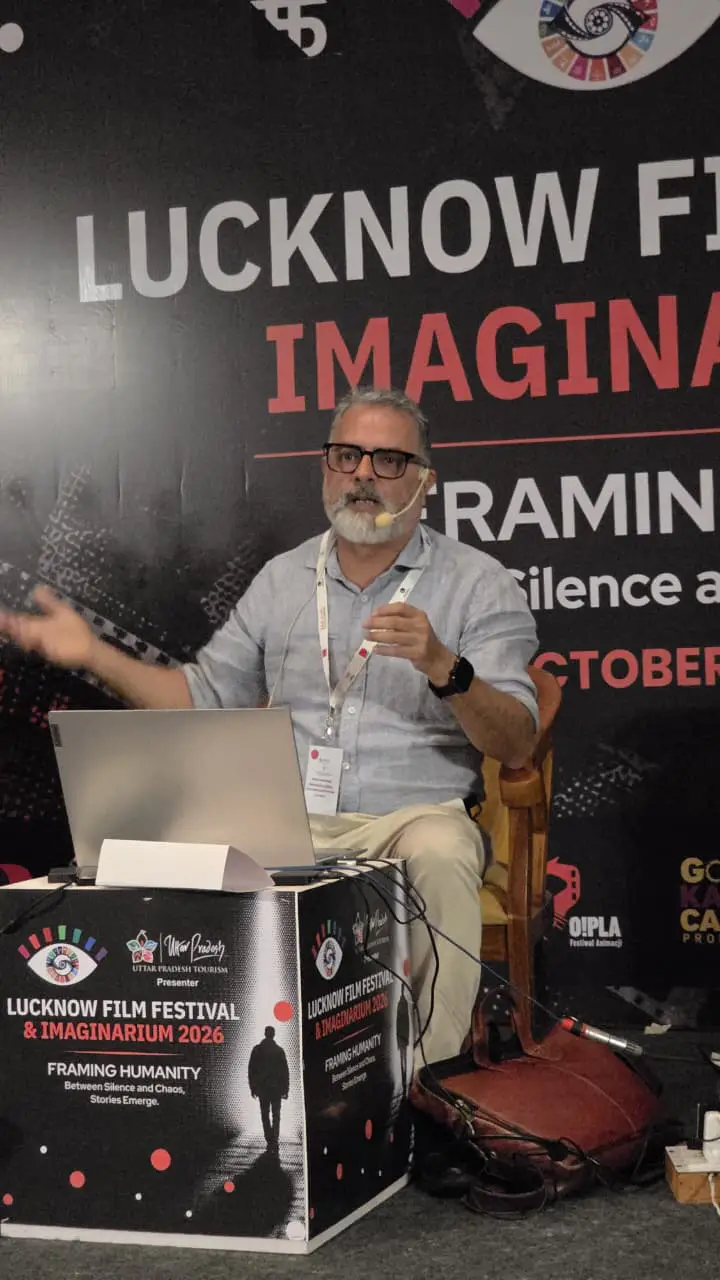
Our starting point was simple. AI is not a shortcut around filmmaking. It is a new canvas — and like every canvas before it, it rewards the person who already knows how to see. Light, lens, composition, performance, rhythm. None of that has gone away. It has simply become the language you speak to the machine.
So instead of talking in the abstract, we built images live on the cinema screen. One of the prompts we worked through that afternoon read like this:
“A single fluorescent light illuminates his face. His expression suggests he is waiting for someone who will never arrive. CU shot with 135mm lens and f/1.8 aperture. There is a strong cool back light creating a rim, and the face is illuminated with a key practical light. Man sitting alone at a railway station.”
Live prompt · AI: The New CanvasRead it again and you will notice it is not really a prompt. It is a cinematographer’s lighting plan — lens, aperture, key, backlight, and the one emotional beat the frame must carry. The clearer your visual thinking, the better the machine listens. If you know why a 135mm compresses a face, or what a cool rim does against a warm practical, you are directing. If you don’t, you are only hoping.
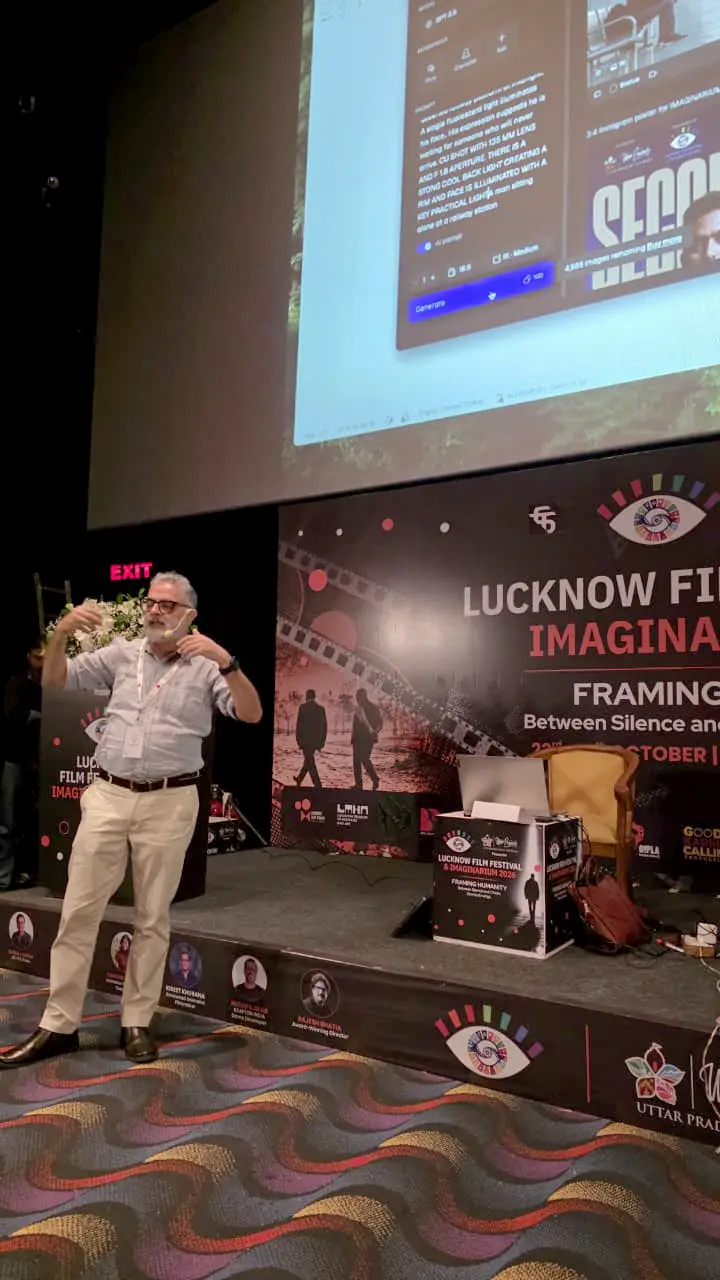
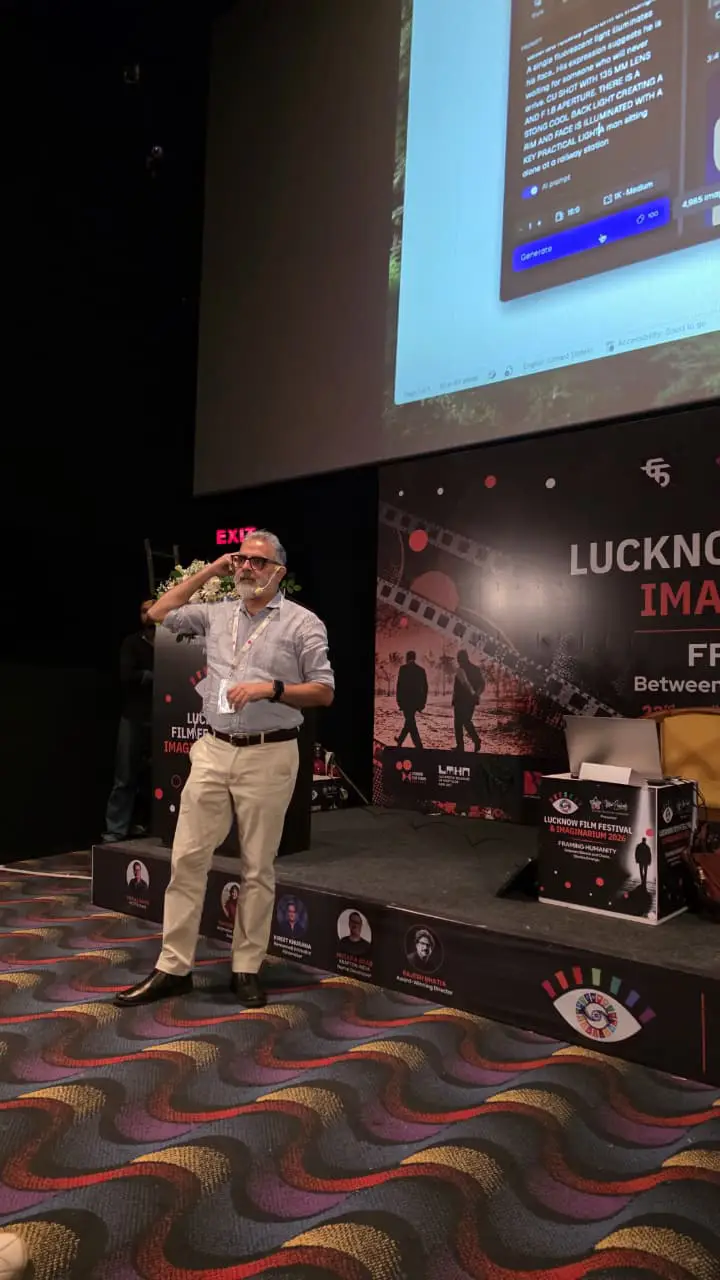
Rajesh Sir brought the director’s eye to the session — how to hold a story together across shots, how to keep characters consistent, and how AI sits inside a real production pipeline rather than replacing it. We also presented films made by participants in the festival’s AI Hackathon, which Rajesh Sir curated. Watching young creators finish complete films in such a short window was the best argument our masterclass could have made.
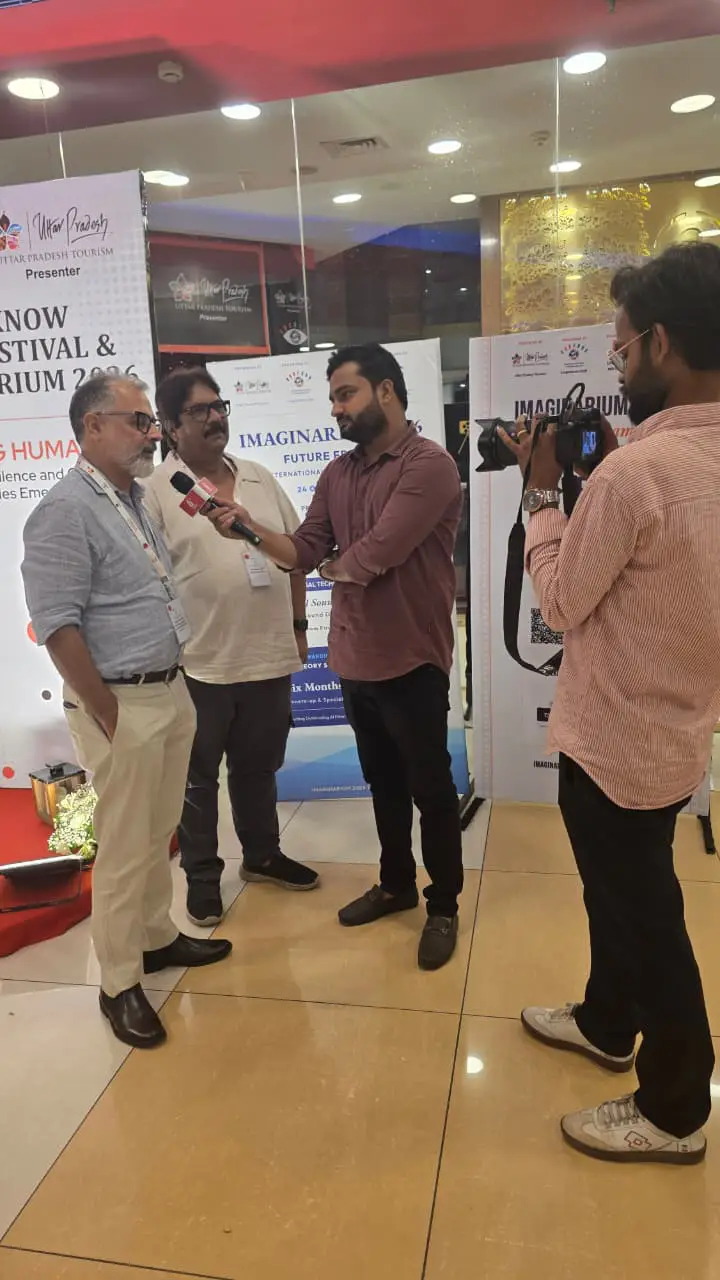 Rajesh Bhatia and Bharat Arora speaking to the media at the festival
Between sessions, Rajesh Sir and I spoke with the media about what AI means for Indian filmmakers — especially those working outside the big production centres. What they still need is what they have always needed: craft, taste, and a story worth telling. Festivals like this one are where that gets nurtured.
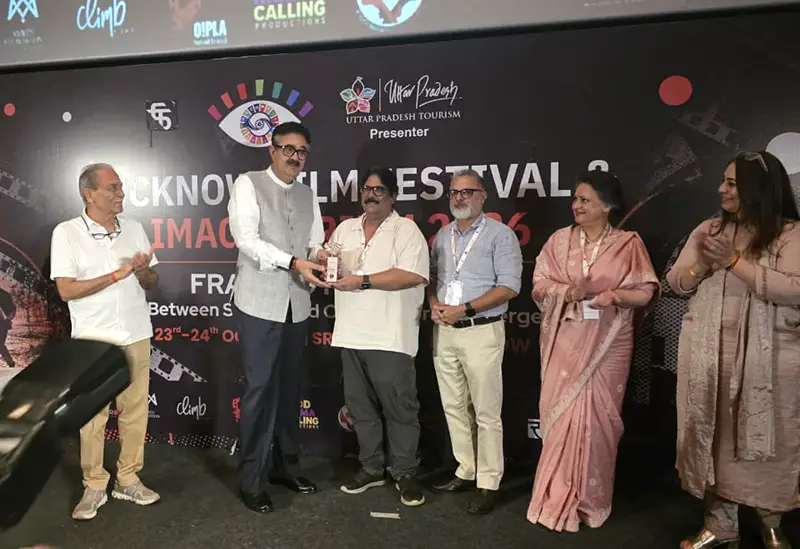 Felicitation at the closing ceremony, Lucknow Film Festival & Imaginarium 2026
The festival closed with an awards ceremony honouring winning filmmakers and partner institutions. Rajesh Sir also served on this year’s festival jury alongside Mukesh Chhabra, Jyoti Kapur Das, Tehzeeb Khurana and Vaibhav Kumaresh.
My sincere thanks to Renuka Tandon and the entire Lucknow Film Forum team for hosting us with such warmth, to Uttar Pradesh Tourism for standing behind the festival, and to Santosh Ojha Sir and FTII for their continued encouragement. And to every student and filmmaker who filled that hall, asked sharp questions and stayed back to talk — thank you, Lucknow.

FTII alumnus with over 35 years of experience as a director, writer, producer, and educator. His work spans television drama, socially conscious cinema, and documentary filmmaking. A pioneer in AI-enabled filmmaking methodologies and the founding creative force behind OpenFrame AI Lab.

Cinematographer, colorist, and AI film director with over 25 years of experience. Trained under the late Shri Dharam Chopra at B.R. Films, Mumbai. Canon India Official Mentor and FTII Course Director. Building AI-integrated cinematic methodologies combining traditional film grammar with generative visual systems. Based in Jammu, J&K.
Stories Emerge.” — Lucknow Film Festival & Imaginarium 2026