Cinematic Reality.
Every great development begins with a drawing. A line on paper that imagines something that does not yet exist. The challenge has always been the same — how do you make someone else see what the architect sees? How do you make an investor feel the scale, the atmosphere, the life of a place that exists only in plans and numbers?
This is the story of how we answered that question for an international marina development project in Dubai — taking it from architect’s drawings to a fully realised, 6-minute cinematic investor pitch film, built entirely using artificial intelligence.
Visualisation Project
Architect’s technical drawings and structural plans for a large-scale international marina development.
A 6-minute photorealistic cinematic film — characters, environments, water, light, atmosphere — ready for investor presentation.
Cinema Studio · Nano Banana Pro · Higgsfield Cinema Studio · Seedance 2.0
International luxury marina development — investor pitch for a large-scale Dubai waterfront project.
The project began with architect’s drawings — technical, precise, and full of possibility. The brief was clear: take these plans and create something that investors could not just understand, but feel. Not a slideshow. Not a static render. A film.
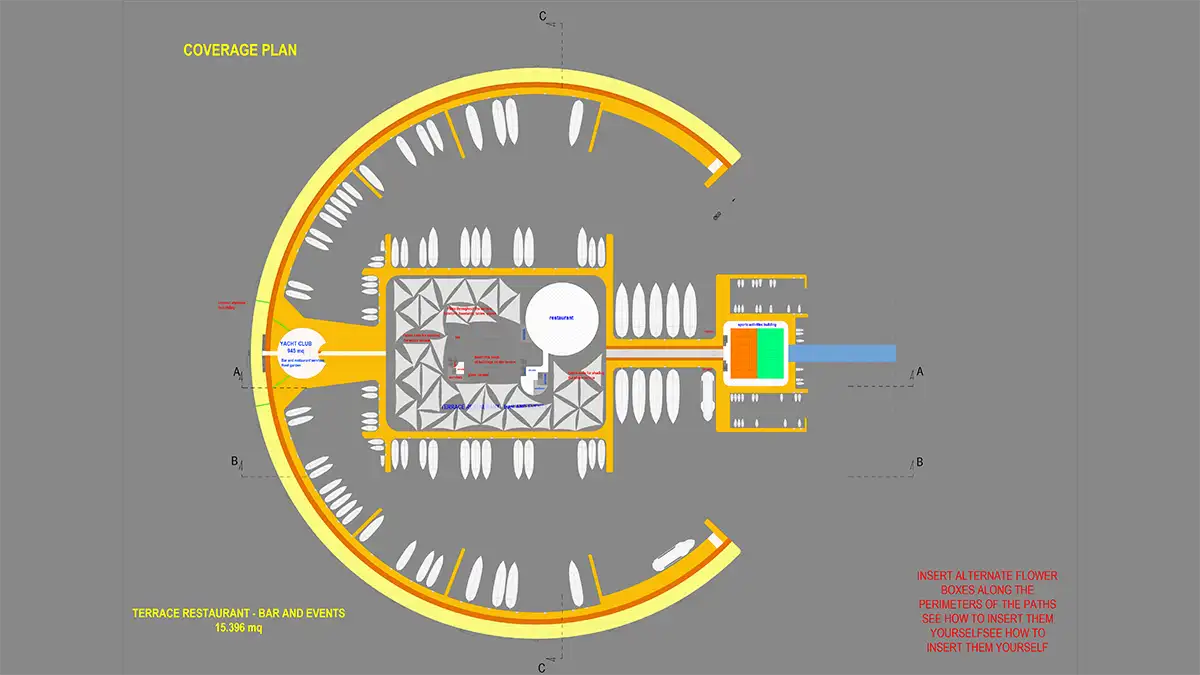
Architect’s technical drawings — the starting point for the entire visualisation
Reading an architectural drawing requires training. Reading a cinematic film requires nothing but eyes and imagination. That is the fundamental shift this project was built around — translating the language of architecture into the language of cinema.
3D Reality
The next step was converting the architect’s drawings into a three-dimensional world. Using the structural plans as the foundation, every element of the marina was modelled — the jetties, the promenade, the buildings, the water frontage, the landscape. This became the spatial bible for the entire film.
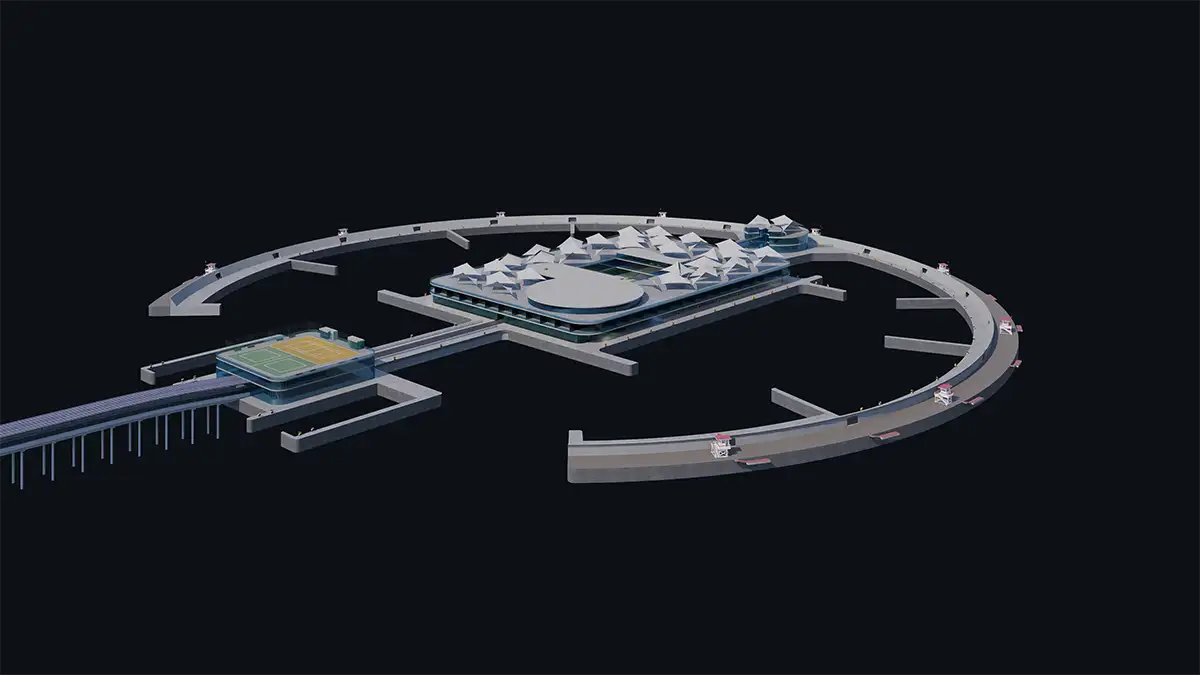
3D model built from architect’s drawings — the spatial foundation for all AI-generated environments
The 3D model was not the end product — it was the reference. Every shot, every angle, every environment in the final film was informed by this model. It ensured architectural accuracy while allowing cinematic freedom in how each space was brought to life.
“The 3D model gave us the architecture. The AI gave us the world around it — the light, the atmosphere, the people, the feeling of being there.”
Was Made
The entire production pipeline — from character creation to environmental rendering to final assembly — was built using generative AI tools. No traditional camera. No physical set. No crew on location. Just intention, craft, and the right tools in the right hands.
Bespoke characters were created to populate the marina — investors, residents, tourists, marina staff. Each character was designed to reflect the aspirational lifestyle the development promises, with consistent appearance across multiple scenes and angles.
Using the 3D model as spatial reference, each location within the marina was generated as a photorealistic AI environment — the waterfront promenade, the yacht berths, the dining terraces, the sunset views across the Gulf. Every frame was built to feel like it was captured on location in Dubai.
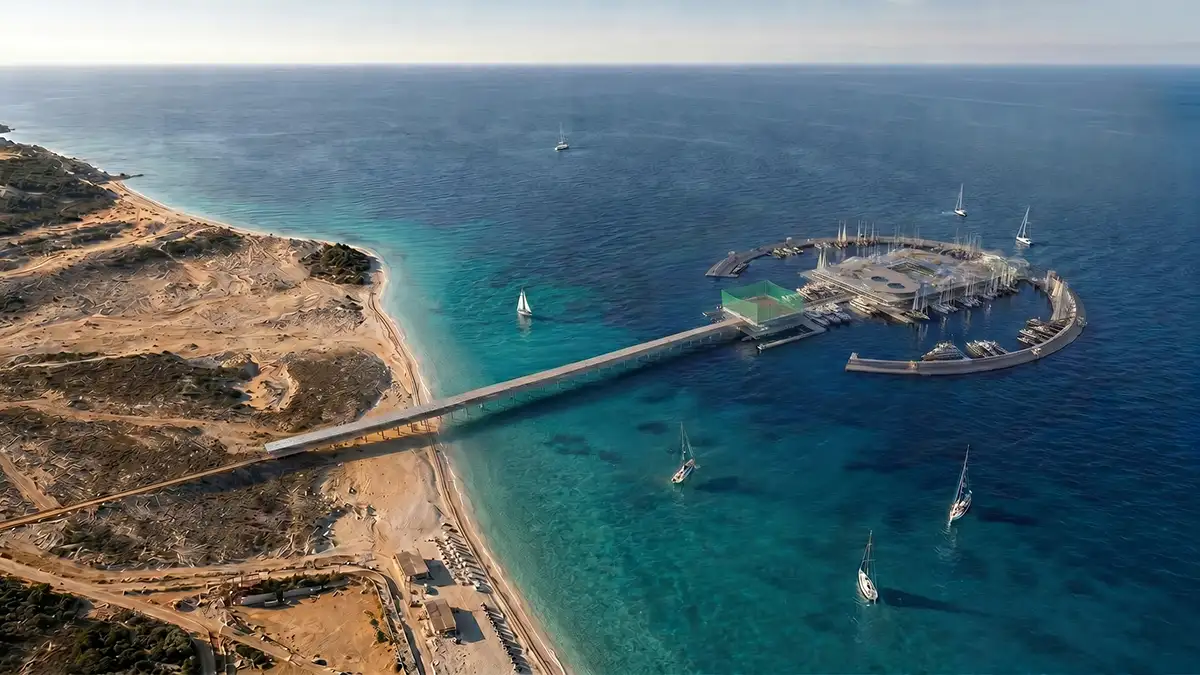
AI-generated marina environment — photorealistic waterfront scene
Each scene was directed with the same principles that guide any serious cinematographic work — lens choice, light quality, camera movement, composition, time of day. The tools were AI. The direction was human. Every frame was a conscious creative decision.

Cinematic framing — directed with traditional cinematography principles
Individual scenes were assembled into a 6-minute narrative film — with a clear visual journey that takes the viewer from arrival at the marina through its key experiences, ending with the kind of golden hour that only Dubai can deliver. Sound design, colour grading and pacing were all applied with the investor audience in mind.
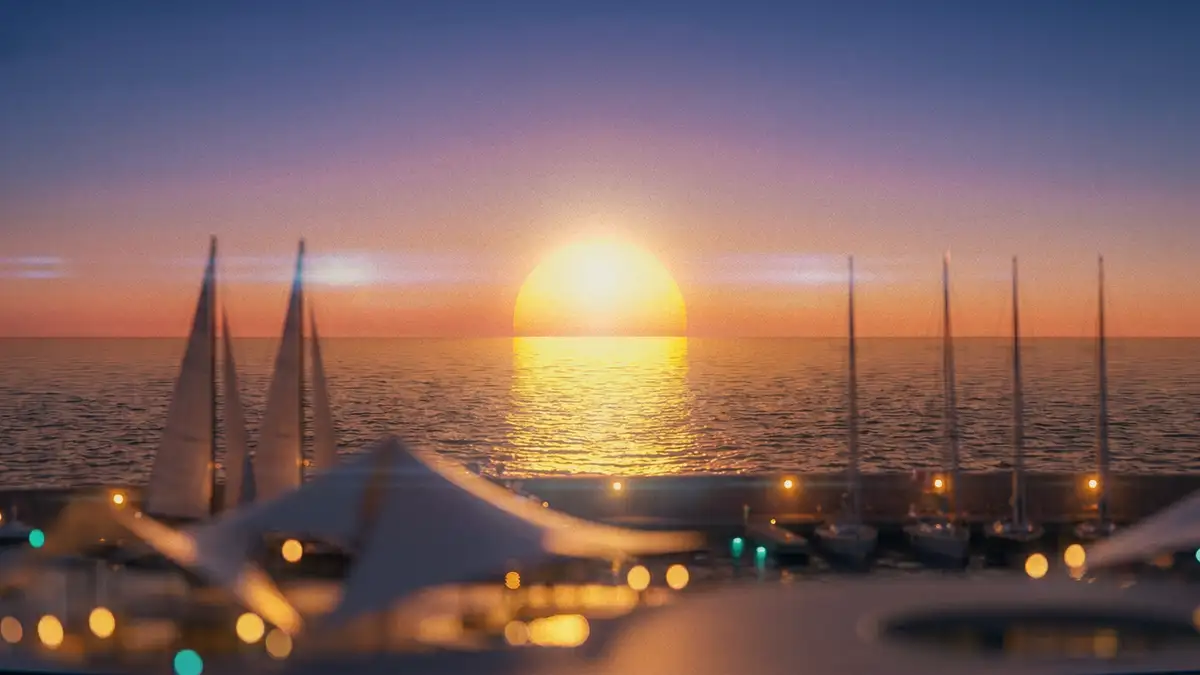
Final graded frame from the completed investor pitch film
The entire film was produced using a purpose-built AI filmmaking pipeline — four tools working in sequence, each handling a specific aspect of the production. No single tool does everything. The craft is in knowing which tool to use, when, and how to make them speak to each other.
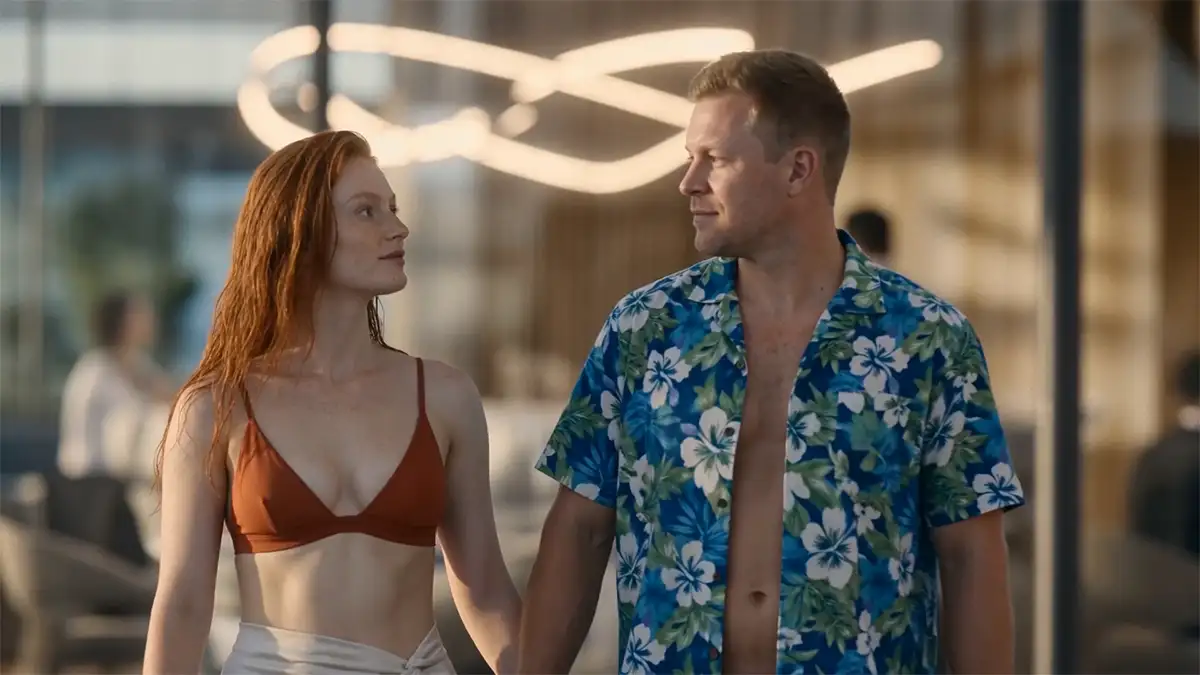
AI-generated scene — characters and environment built entirely with generative tools
Six minutes. One marina. Built from a drawing, realised through artificial intelligence, directed with cinematic intention. This is what AI visualisation looks like when it is taken seriously.
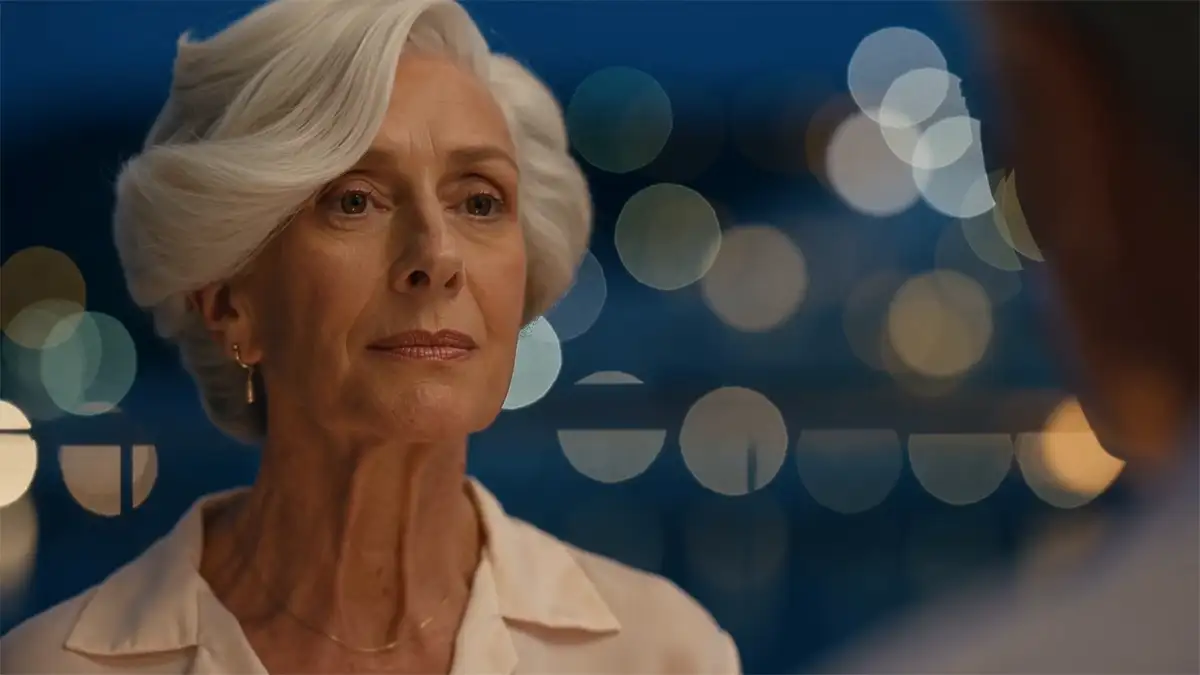
Golden hour at the marina — the final sequence of the investor pitch film
Architectural Visualisation
Traditional architectural visualisation — physical models, CGI renders, animation studios — requires months of production time and significant budgets. AI visualisation changes that equation fundamentally.
A production pipeline that would traditionally take months can now be completed in weeks — without compromising on cinematic quality.
No physical crew, no location travel, no studio rental. The entire production cost is a fraction of traditional visualisation at this quality level.
Photorealistic environments, consistent characters, and cinematic direction that matches the standard of broadcast-quality production.
Changes to design, lighting, season, or time of day can be incorporated rapidly — the film evolves as the project evolves.
This is not the future of architectural visualisation. It is the present. And it is available right now.
Looking to visualise your next development project?
As an independent AI artist, director and visualiser, I create brand films, cinematic narratives and ultra-realistic AI content — from architectural visualisations and investor pitch films to brand storytelling and everything in between.